To identify the optimal harvest time and effective utilization of Polygonatum odoratum, we explored the molecular mechanisms of secondary metabolite accumulation across four growth years (Y1-Y4) using integrated metab�olomics and transcriptomics. KEGG enrichment analysis of differentially expressed genes (DEGs) and differen�tially accumulated metabolites revealed significant enrichment of flavonoid biosynthetic pathways. A widely targeted metabolomics approach identified 134 differentially accumulated flavonoids and 76 phenolic acid metabolites, of which 130 metabolites showed markedly higher accumulation in Y3 and Y4. Accordingly, 2516 DEGs exhibited a consistent expression trend with metabolites and were highly expressed in Y3 and Y4. WGCNA of 130 flavonoids, phenolic acids, and 2516 DEGs identified a module (2264 DEGs) that was positively correlated with Y4 and showed a peak expression at this stage. GO and KEGG analyses revealed that these genes were enriched in phenylpropanoid, flavonoid, and secondary metabolite biosynthetic pathways, indicating their key roles in elevated flavonoid and phenolic acid accumulation in Y4. Correlation analysis of genes in phenyl�propanoid and flavonoid biosynthesis pathways with 130 highly accumulated flavonoids/phenolic acids in Y3/ Y4 identified 22 genes that were significantly positively correlated with 30 metabolites, which were regulated by 16 transcription factors (e.g., MYB-related-3, NAC-7, bHLH-5, AP2-ERF-9). Notably, F5H was associated with the regulation of 24 metabolites, highlighting a complex TF-gene-metabolite regulatory network. These findings provide a valuable molecular framework for P. odoratum cultivation and utilization, particularly supporting that Y4 shows a higher enrichment trend of flavonoids and phenolic acids.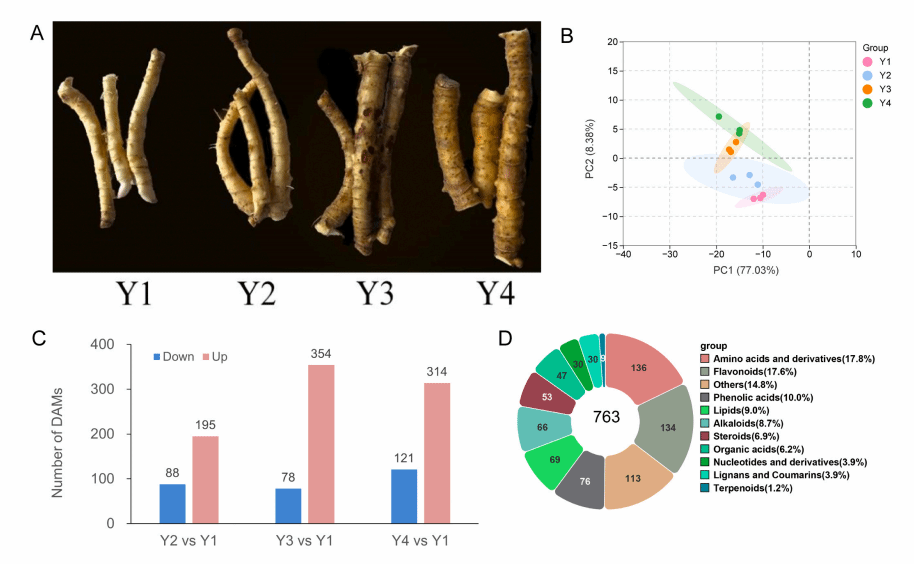

 发表论文
发表论文