Although increasing nitrogen (N) deposition seriously threatens soil microbial communities and plant-microbe interactions, little research has been conducted on endangered plants. In this study, the impacts of simulated N deposition on root morphology, soil properties, as well as the arbuscular mycorrhizal (AM) fungal and bacterial communities in the rhizosphere of the endangered species Calycanthus chinensis were investigated. Based on the results, N deposition altered root morphology (e.g., root diameter, length, volume, and surface area) of C. chinensis seedlings and soil extracellular enzyme activities (e.g., urease and catalase). Additionally, N depo�sition increased soil microbial biomass N but not soil microbial biomass carbon, particularly at high N levels. Although N deposition had no significant effect on AM fungal diversity and community composition, it signifi�cantly reduced bacterial diversity. Notably, AM fungal co-occurrence networks became more complex with increasing N deposition, suggesting enhanced network stability, whereas bacterial networks exhibited the opposite pattern. The variation of soil properties, particularly soil pH, nitrate and available potassium, contributed to the co-occurrence network structures. These findings provide insights into the differential re�sponses of soil microbial communities to N deposition and their potential implications for the growth and sur�vival of endangered plants in disturbed ecosystems.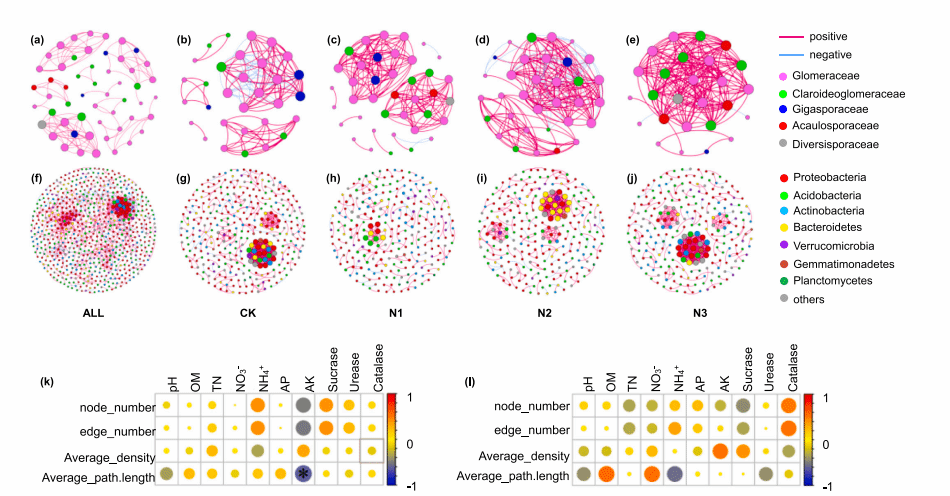


 发表论文
发表论文